

Home > Product display
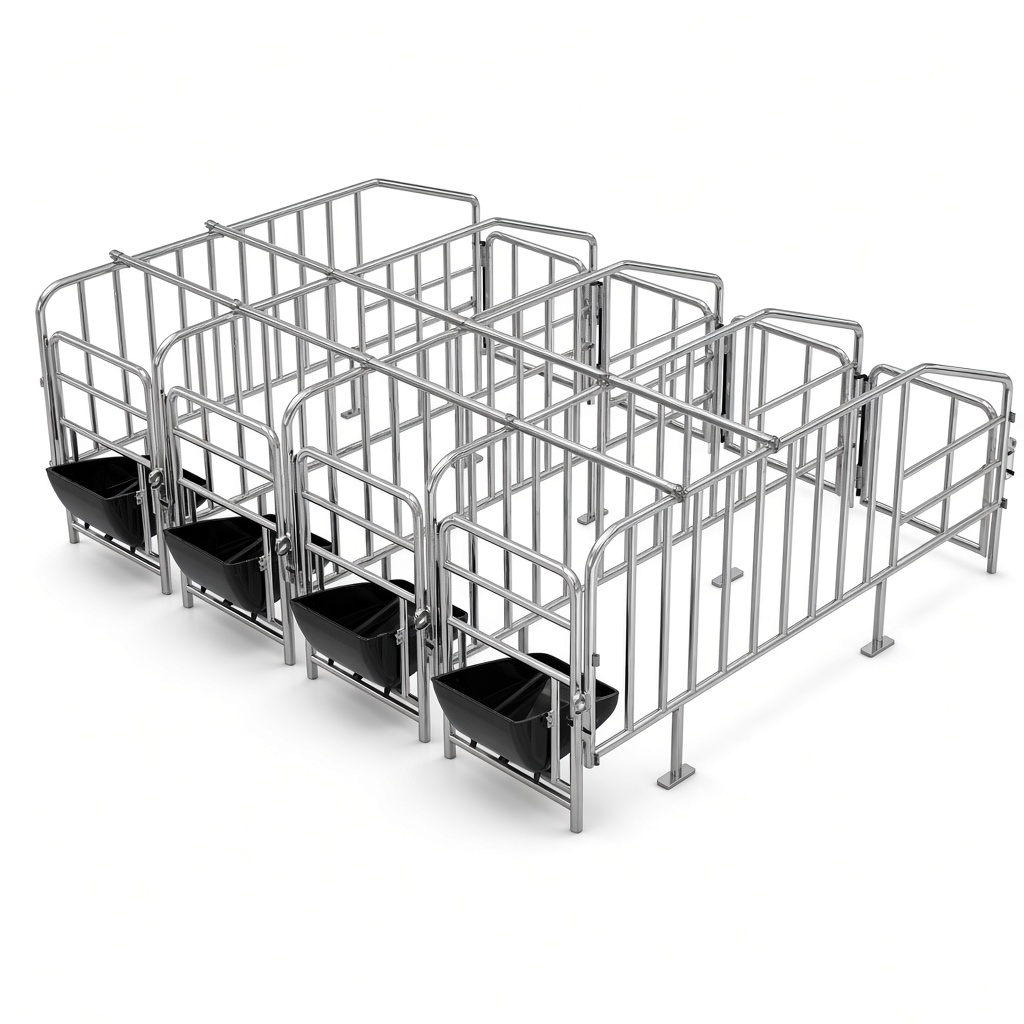
Improve piglet survival rates and streamline farrowing house management with this Galvanized Pig Farrowing Stall Crate — a heavy-duty, multi-unit confinement system designed for modern commercial pig farms.
Each stall combines a sow restraint area with a separate piglet nursing zone, a design standard in modern farrowing houses that helps prevent sow crushing injuries while still allowing piglets safe, unrestricted access to nurse. This welfare-focused layout is increasingly required or preferred by pork producers and processors in North America, Europe, and other export markets with animal welfare compliance standards.
The crate frame is constructed from hot-dip galvanized steel tubing, providing long-term corrosion resistance against the high-moisture, high-ammonia environment typical of farrowing houses. A built-in feed trough is integrated directly into the front of each stall, allowing sows to feed without needing separate feeding equipment, which simplifies daily farm labor and feed management.
This unit is available in a multi-stall gang configuration, allowing farms to install connected rows of farrowing crates to maximize barn space efficiency. The modular structure also simplifies future expansion, replacement of individual panels, and maintenance.
Built for commercial-scale operations, this farrowing crate system is engineered to support consistent piglet output, reduce labor costs, and meet the durability demands of continuous farm use.
What is a pig farrowing stall crate used for? A farrowing stall crate houses a sow during and after giving birth, restraining her movement to reduce the risk of piglets being crushed while still allowing piglets access to nurse in a protected adjacent zone.
How does the sow and piglet separation work? The crate divides the stall into a central sow restraint area and a surrounding piglet zone. This layout limits the sow's ability to lie down suddenly or shift position in a way that could crush nearby piglets, while piglets can move freely in and out of the nursing area.
What material is this farrowing crate made from? The frame is constructed from hot-dip galvanized steel tubing, which provides strong resistance to rust and corrosion caused by constant exposure to moisture, manure, and ammonia in farrowing house environments.
Can multiple farrowing crates be connected together? Yes. This crate is designed for multi-stall gang installation, allowing farms to install several connected units in a row to make efficient use of barn space and simplify installation across large farrowing houses.
Does this crate include a feeder? Yes. Each stall has a built-in feed trough at the front, allowing sows to be fed directly within the crate without additional feeding equipment.
What size sow does this crate accommodate? Farrowing crates are typically sized to standard commercial sow dimensions. Confirm exact stall length, width, and restraint bar spacing in the product specifications to ensure compatibility with your herd.
Is this crate suitable for export to markets with animal welfare requirements? The sow/piglet separation design reflects welfare-oriented farrowing house standards common in many export markets. Buyers should confirm specific certification or regulatory requirements for their target market, as welfare standards vary by country and importer.
How is this crate installed? The crate is installed on a flat concrete farrowing house floor and anchored using floor bolts or fixing plates at the base of the frame. Multi-unit rows are joined using connecting brackets between adjacent stalls.
What maintenance does a galvanized farrowing crate require? Galvanized steel requires minimal maintenance under normal conditions. Periodic inspection of welds, hinges, and the feed trough is recommended to ensure structural integrity and smooth operation over time.